Laser Marking Machine Nepal
AP Compressors (Aerolith Machinery) supplies CO2, UV, and Fiber laser marking machines across Nepal — permanent, contact-free coding on metals, plastics, glass, and pharma packaging. Zero consumables, zero contact, permanent marks.
Installation, software setup, operator training, and after-sales service in Kathmandu, Bhairahawa, Birgunj, Biratnagar, Pokhara and all 7 provinces of Nepal.
Choose Your Laser Type
Each optimised for specific materials — AP Compressors recommends the right type for your application.
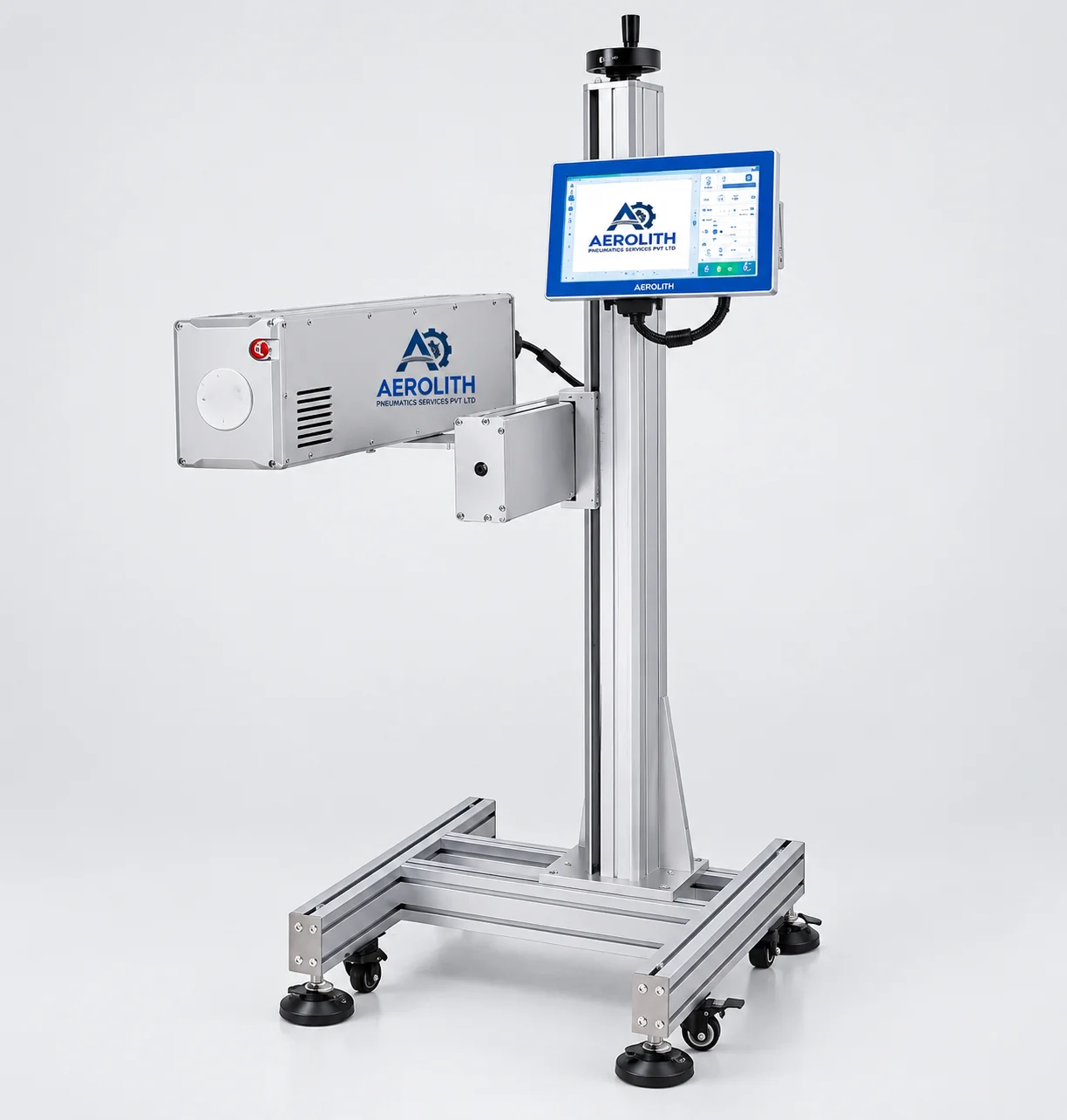
CO2 Laser Marking Machine
Best for wood, acrylic, glass, leather, rubber, and packaging. Used in food packaging, woodworking, and engraving.
- 10,600 nm wavelength
- Wood, acrylic, glass, rubber
- Packaging & engraving
- 10W – 150W range
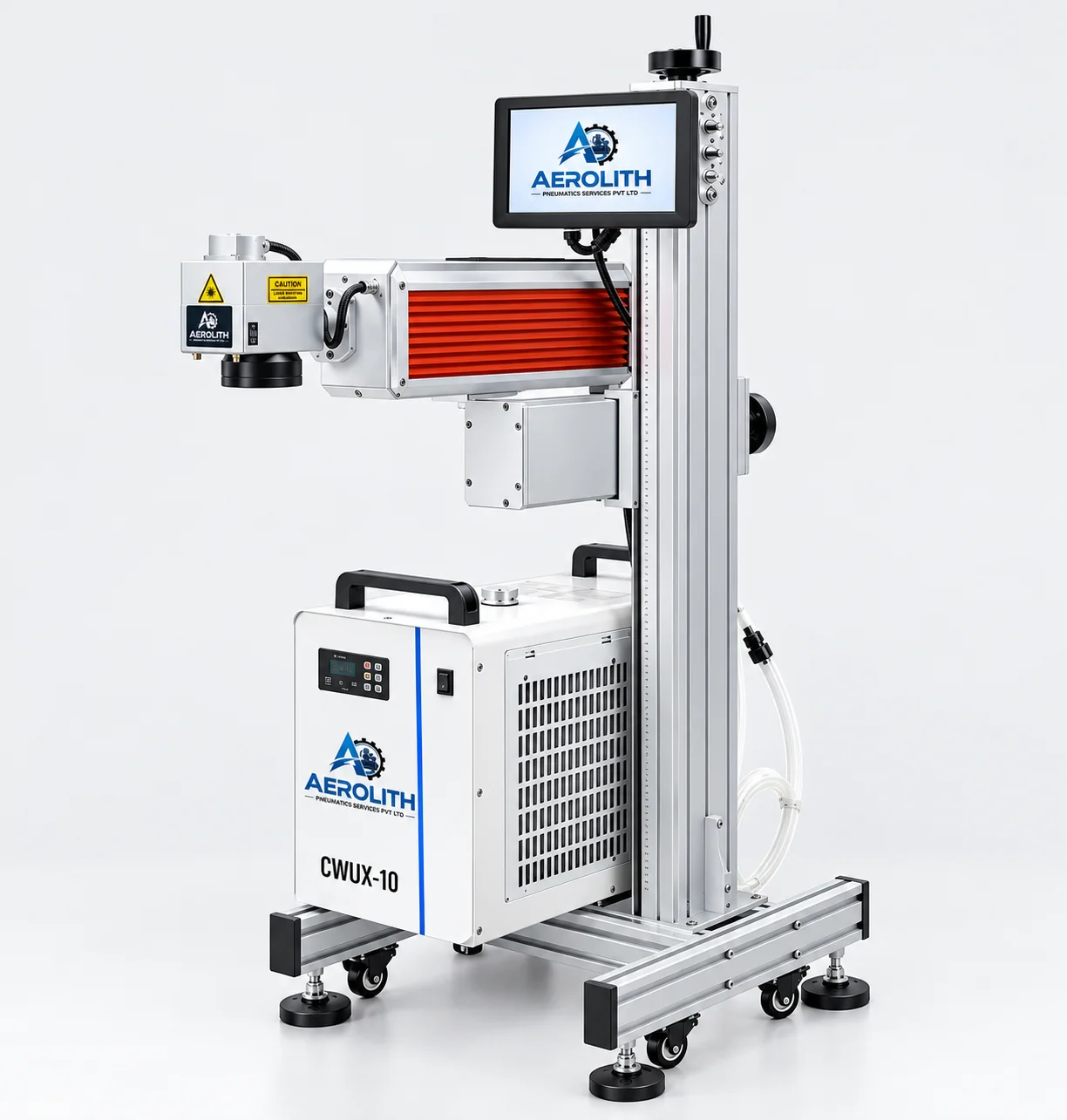
UV Laser Marking Machine
Cold-process UV laser for pharma packaging, electronics PCBs, glass vials, and heat-sensitive plastics. Near-zero HAZ.
- 355 nm wavelength
- Pharma & PCB marking
- Near-zero heat damage
- 3W – 15W range
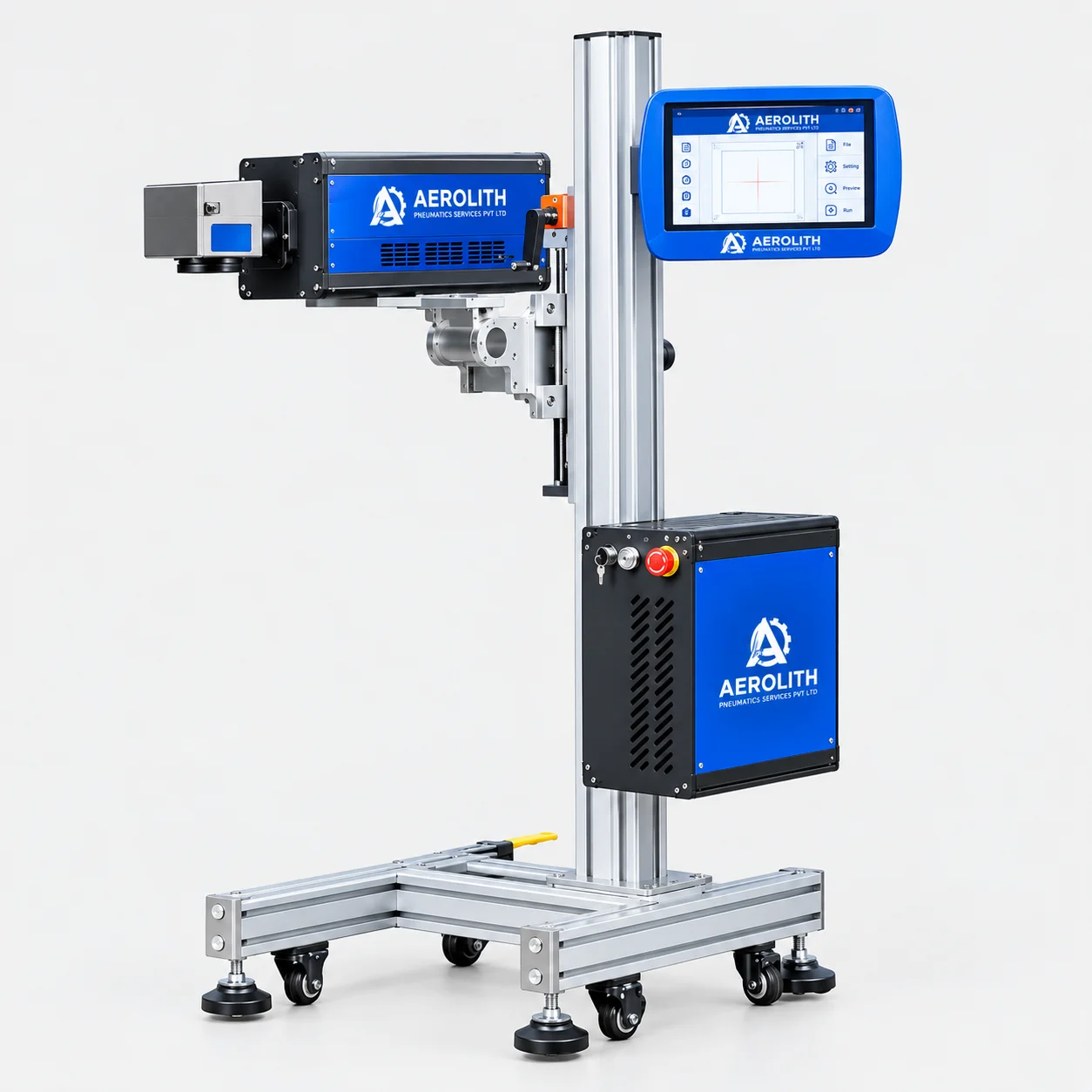
Fiber Laser Marking Machine
Industry-standard for stainless steel, aluminium, brass, copper, and hard plastics. High speed, 100,000+ hr source life.
- 1,064 nm wavelength
- All metals + hard plastics
- 100,000+ hr fiber life
- 20W – 100W range
Quick Answer
Which laser marking machine do you need?
Fiber Laser
Metals — steel, aluminium, brass, copper, hard plastics
CO2 Laser
Non-metals — wood, acrylic, glass, leather, rubber, packaging
UV Laser
Heat-sensitive — pharma packs, PCBs, glass vials, films
12+ Cities
Service coverage across Nepal
Same Day
Response for installation queries
AMC Available
Annual maintenance contracts
Zero Consumables
No ink, no labels — laser only
Why laser marking over inkjet printing or labels?
Permanent, tamper-proof marks
Laser marks cannot be wiped, peeled, or removed without destroying the substrate — essential for traceability, anti-counterfeiting, and regulatory compliance in Nepal.
Zero consumables — electricity only
No ink, no solvents, no ribbons, no labels. Running cost is near-zero — far more economical over 3–5 years than inkjet coding or thermal transfer.
High speed — up to 10,000 mm/s
Modern Fiber and CO2 systems mark at production-line speed — no slow-down, no contact, no drying time required.
Non-contact — no product damage
Ideal for fragile glass vials, thin foil, electronic components, and precision metal parts that cannot be clamped or exposed to inkjet spray.
Barcodes, QR codes, variable data per part
Batch numbers, serial numbers, expiry dates, and QR codes change automatically per part — no reprinting plates, no ribbon change, no ink refill.
Laser marking vs inkjet coding — comparison
| Criteria | Laser | Inkjet / Label |
|---|---|---|
| Mark permanence | Permanent | Fades / peels |
| Consumable cost | Zero (electricity only) | Ink, solvent, labels |
| Running cost / year | Very low | Moderate to high |
| Mark quality | High resolution | Medium |
| Maintenance | Low — no ink system | Regular cleaning, refills |
| Speed | Up to 10,000 mm/s | Moderate |
| Contact with product | None | Nozzle / label press |
| Variable data | Yes — per part | Yes |
| Initial investment | Higher | Lower |
Industries using laser marking machines in Nepal
From Kathmandu pharma factories to Bhairahawa SEZ — laser marking is used across Nepal's manufacturing sector.
Pharmaceutical & Healthcare
UV / FiberBatch numbers, expiry dates, serial codes on blister packs, glass vials, and medicine cartons. UV laser for heat-sensitive pharma packaging.
Food & Beverage Packaging
CO2 / UVBest-before dates, lot numbers, and QR codes on PET bottles, HDPE containers, and flexible packaging. Common in Kathmandu and Birgunj food factories.
Metal Parts & Auto Components
FiberSerial numbers, part codes, and manufacturer logos on steel, aluminium, and brass components. Bhairahawa SEZ and Biratnagar engineering industries.
Electronics & PCB Manufacturing
UVComponent codes, board serial numbers, and QR traceability on PCBs and electronic housings. UV laser for fine detail without heat damage.
Jewellery & Handicrafts
FiberHallmarks, brand logos, and decorative patterns on gold, silver, and brass jewellery. Kathmandu Valley goldsmith and export industry.
Pipes, Cables & Building Materials
CO2 / FiberSpecification codes, brand marks, and length markings on PVC/HDPE pipes and electrical cables. Active across all provinces.
Need a laser marking machine in Nepal?
Tell us your material, marking requirement, and production volume — we will recommend the right laser type, wattage, and configuration.
Laser marking machine supply — all provinces of Nepal
AP Compressors supplies and services laser marking machines in all 7 provinces of Nepal. Installation, operator training, spare parts, and AMC available nationwide.
Kathmandu
Bagmati Province
Pharma, packaging, electronics, light manufacturing
Bhairahawa
Lumbini Province
SEZ industries, food processing, auto components
Birgunj
Madhesh Province
Border trade, manufacturing, metal fabrication
Biratnagar
Koshi Province
Jute, food processing, pipe manufacturing
Pokhara
Gandaki Province
Food & beverage, construction materials
Bharatpur
Bagmati Province
Industrial corridor, pharma, packaging
Butwal
Lumbini Province
Cement, food processing, manufacturing
Hetauda
Bagmati Province
Industrial estate, cement, plastics
Lalitpur
Bagmati Province
Garments, printing, handicrafts
Dharan
Koshi Province
Healthcare, light manufacturing
Nepalgunj
Lumbini Province
Border trade, food processing
Janakpur
Madhesh Province
Food, FMCG, light industry
Support & Answers
Frequently
Asked Questions
Find answers about our air compressors, air dryers, filters, customized compressed air solutions, installation, and maintenance services.
Reach out to our teamA laser marking machine uses a focused laser beam to create permanent marks on materials — metals, plastics, glass, ceramics, and more. The laser removes or alters the surface material to produce text, barcodes, QR codes, logos, and serial numbers without contact or consumables. Three main types are used: Fiber (metals), CO2 (non-metals), and UV (heat-sensitive materials).
Fiber laser is best for metals and hard plastics — stainless steel, aluminium, brass, copper. CO2 laser suits non-metals — wood, acrylic, leather, glass, rubber, and packaging. UV laser is ideal for sensitive materials like pharma blister packs, electronics PCBs, and food-grade plastics where heat must be minimised. AP Compressors assesses your material and application before recommending.
Laser marking machine prices depend on laser type (CO2, UV, or Fiber), wattage, marking area, and brand. Contact AP Compressors at +977 9806922190 for a specific quote based on your material and production requirement.
Yes. AP Compressors (Aerolith Machinery) provides full installation, commissioning, software setup, operator training, and after-sales service in Nepal — Kathmandu, Bhairahawa (Rupandehi), Birgunj, Biratnagar, Pokhara, Bharatpur, Butwal, and all major industrial cities.
Fiber lasers mark stainless steel, aluminium, brass, copper, titanium, carbide, and hard plastics (ABS, PC, nylon). CO2 lasers mark wood, acrylic, MDF, leather, rubber, glass, ceramics, and coated metals. UV lasers mark pharma blister packs, PET bottles, PCBs, glass vials, and heat-sensitive polymers.
Laser marking produces permanent, tamper-proof marks that resist abrasion, chemicals, and heat. Unlike inkjet coding or labels, laser marking requires no ink, solvents, ribbons, or labels — only electricity. Running cost is near-zero, making it highly cost-effective over time.
Yes. AP Compressors provides scheduled and emergency service for laser marking systems across Nepal. Annual Maintenance Contracts (AMC) available. Service covers Kathmandu Valley, Bhairahawa/Rupandehi, Birgunj, Biratnagar, Pokhara, and surrounding provinces.
Yes. All laser marking systems support barcode (Code 128, Code 39, EAN, UPC), QR code, DataMatrix, and 2D code marking from controller software — used for traceability, anti-counterfeiting, and batch/lot coding in pharma, food, and manufacturing.
Laser marking changes the surface colour without deep material removal — used for serial numbers on metals. Laser engraving removes material to create recessed marks — used for deep ID marks and moulds. Laser etching melts the surface for raised marks. All three are produced by adjusting the same laser machine's power, speed, and focus settings.
Pharmaceutical manufacturers (batch codes on blister packs), food and FMCG packagers (date codes on PET/HDPE), metal parts manufacturers (serial numbers, part codes), jewellery makers (hallmarks, logos), electronics assemblers (PCB traceability), and pipe/cable manufacturers (specification marks) — all use laser marking in Nepal.