
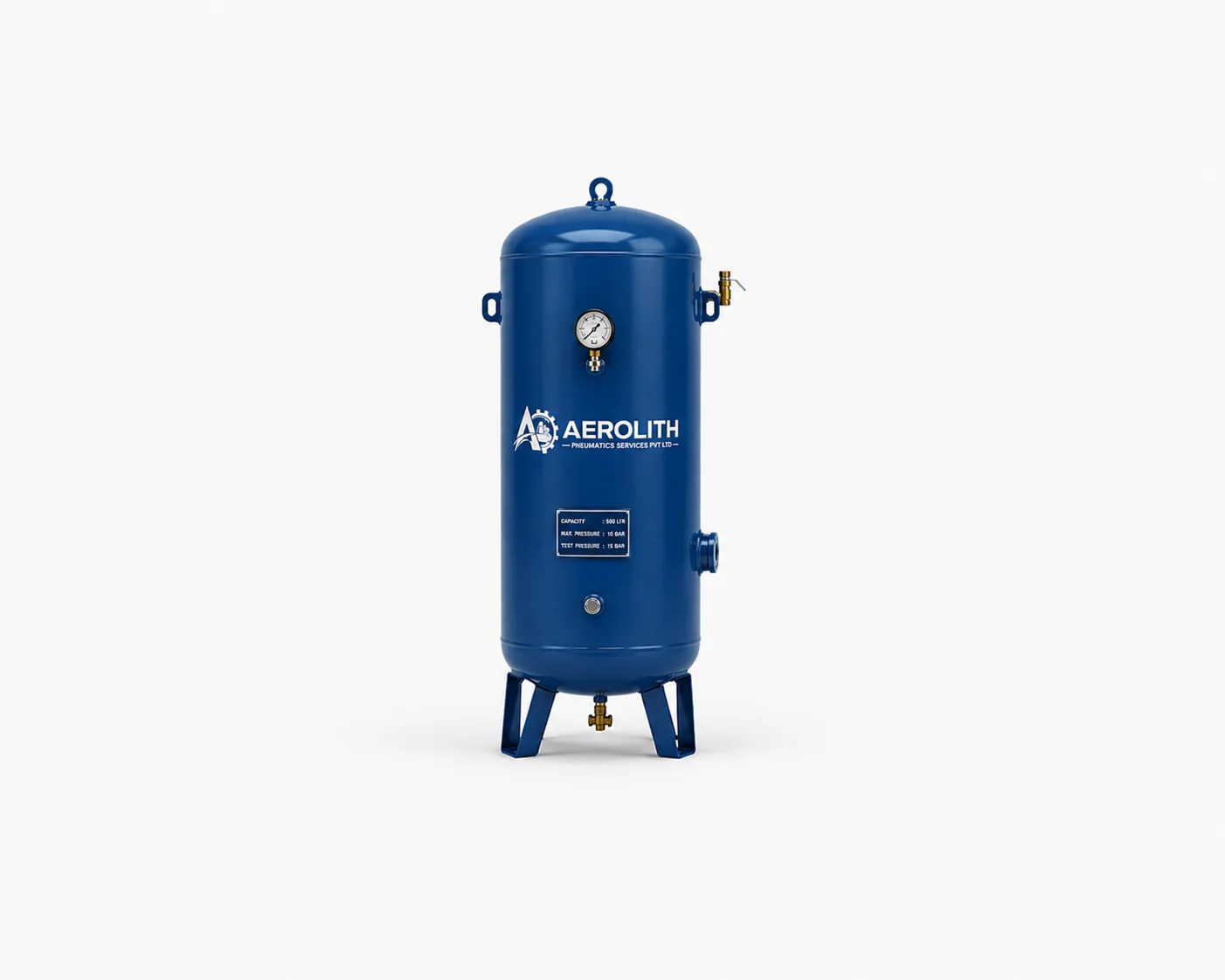
Air Receivers in Parasi
Parasi's rice mills and agro-processing facilities often have high peak air demand during active conveying, bagging, and pneumatic cleaning operations — demand that the compressor alone cannot always deliver without pressure drop. A correctly sized receiver provides the storage buffer needed to handle these peaks and keeps line pressure stable across the plant. For new Parasi plants establishing their compressed air infrastructure for the first time, AP Compressors designs the complete system — compressor, dryer, filter, and receiver — as an integrated package sized for both current and planned future capacity.
- Buffers pressure during peak demand and reduces compressor stress
- Helps stabilize air pressure for sensitive processes in Parasi factories
Instant factory quotation & technical consultation available across Nepal
Key Benefits
- Buffers pressure during peak demand and reduces compressor stress
- Helps stabilize air pressure for sensitive processes in Parasi factories
- Reduces load-unload frequency, lowering compressor wear
- Useful for expanding existing systems without a new compressor
Product Overview
- Use
- Compressed air storage and pressure buffering
- Capacity range
- 100 litres – 5,000+ litres
- Pressure rating
- Up to 16 bar
- Placement
- Near compressor or at point of use
- Coverage
- Parasi, Lumbini Province
- Support
- Sizing guidance for your plant's air demand
Industries & Applications
Main compressor rooms in industrial plants
Peak demand buffering for agro-processing factories
Pneumatic tool networks with intermittent high demand
Existing compressed air systems needing pressure stabilization
Need help selecting the right compressor?
Our team can review your air demand, pressure requirements, and recommend a practical fit for your plant.
Support & Answers
Frequently
Asked Questions
Find answers about our air compressors, air dryers, filters, customized compressed air solutions, installation, and maintenance services.
Reach out to our teamAn air receiver absorbs peak demand spikes, keeps pressure stable across your distribution network, and reduces how often your compressor cycles on and off — all of which extend equipment life and reduce energy waste.
Tank size is selected based on your compressor output (CFM), acceptable pressure drop, and the duration and frequency of peak demand events. We can help you size correctly for your Parasi plant layout.
Air receivers are available from 100 litres for small workshops to 5,000 litres or more for large industrial plants. For most Parasi factories running screw compressors, tanks between 500 and 2,000 litres are common. AP Compressors recommends the right size based on your compressor CFM and peak demand profile.
The primary receiver is typically installed immediately downstream of the compressor and dryer in the compressor room. Secondary receivers can be placed at high-demand points in the distribution network to provide local buffering and reduce pressure drop at the point of use.
Yes. Air receivers are pressure vessels and should meet applicable pressure vessel standards. Regular visual inspections for corrosion, check of safety relief valves, and drain valve operation are essential. AP Compressors supplies receiver tanks that meet industrial quality standards for use in Parasi and Lumbini Province.
Yes. A correctly sized receiver reduces how often the compressor loads and unloads, lowering wear and energy consumption. For plants with intermittent high demand in Parasi, an additional receiver can allow a smaller compressor to handle peak loads more efficiently.
Yes. AP Compressors supplies horizontal and vertical air receiver tanks in Parasi, and assists with placement, piping connections, and integration into your compressed air system.
A good-quality air receiver in a properly maintained system can last 15–25 years. Key factors are regular draining of condensate, corrosion checks, and ensuring the safety relief valve is functional. AP Compressors recommends including receiver inspection in your annual compressed air service in Parasi.